

Table of Contents
- What Small Shops Need From DTF Transfers
- Comparison Table: Top DTF Transfer Options
- DTF Transfer Suppliers Worth Evaluating
- Single DTF Transfers vs. Bulk Orders
- DTF Gang Sheets: Maximizing Efficiency on Limited Orders
- Evaluating DTF Transfer Quality Before Committing
- Cost, Turnaround, and Reliability: What Matters Most
- Frequently Asked Questions
Last Updated: October 4, 2026
What Small Shops Need From DTF Transfers
Direct-to-film transfers have become essential for small apparel shops looking to scale production without investing in expensive equipment. When evaluating best DTF transfers for small shops, you're really asking: which supplier lets me order in small quantities, maintain consistent quality, and stay competitive on price?
The reality is straightforward. Small shops operate differently than large print facilities. You need suppliers who understand that a 10-unit order matters as much as a 500-unit order. You need fast turnaround without minimum order penalties. You need transfers that hold up through dozens of washes without cracking, fading, or peeling.
This guide from Mirage DTF Transfers breaks down what actually matters when choosing a DTF transfer supplier for a small operation.
Comparison Table: Top DTF Transfer Options
| Supplier | Best For | Key Consideration | Ordering Model |
|---|---|---|---|
| Mirage DTF Transfers | Professional shops requiring secure, private ordering | Premium quality and reliability | Custom orders with login access |
| DIY Printz | Small shops with no minimums | Same-day options available | Individual transfers or gang sheets |
| DTF2GO | Shops using gang sheets efficiently | Ready-to-press print-and-cut transfers | Per-sheet or per-transfer pricing |
DTF Transfer Suppliers Worth Evaluating
1. Mirage DTF Transfers, Best for Professional Small Shops
Our platform prioritizes what small shops actually need: secure ordering, consistent quality, and a professional experience built for B2B work. We understand the frustration of clunky interfaces and unreliable suppliers. That's why we've built Mirage DTF Transfers as a secured, login-based platform designed specifically for apparel professionals.
What sets us apart is our commitment to reliability. Small shops can't absorb the cost of a bad batch. When you order from Mirage DTF Transfers, you're working with a supplier that treats your 20-unit order with the same attention as a 500-unit order. Our team focuses on consistent quality, fast turnaround, and the kind of support that understands your workflow.
2. DIY Printz, Best for No-Minimum Orders
DIY Printz appeals to shops that need flexibility on order size. Their model eliminates the pressure of minimum order quantities, which matters for small operations testing new designs or fulfilling one-off custom orders.
The pricing structure here is straightforward: approximately $1.48 per individual transfer, or gang sheets starting around $19.99. Same-day options are available, which can save you when a customer deadline is tight. The tradeoff is that you're paying per-unit rather than negotiating bulk pricing, so this works best for truly small batches or rush situations.
What to watch: Confirm eligibility and cutoff times for same-day service before you rely on it for a deadline.
Single DTF Transfers vs. Bulk Orders
The choice between ordering individual transfers and bulk quantities depends on your shop's workflow and cash flow.
Single transfers make sense when you're fulfilling one-off custom orders, testing a new design before committing to inventory, or managing low-volume custom merchandise lines. You pay a premium per unit, but you avoid tying up capital in inventory that might not sell.
Bulk orders reduce your per-transfer cost significantly, but they require confidence that you'll move the inventory. Small shops often find that ordering 50-100 units of a proven design beats ordering singles repeatedly. The math shifts in favor of bulk when you're running the same design multiple times per month.
The real decision point: How predictable is your demand? If you're fulfilling custom orders as they come in, singles make sense. If you're stocking inventory for repeat designs or seasonal merchandise, bulk ordering becomes cost-effective quickly.
DTF Gang Sheets: Maximizing Efficiency on Limited Orders
Gang sheets consolidate multiple designs onto a single sheet, then you cut each design to size before pressing. This approach reduces waste and lowers your per-transfer cost compared to ordering individual transfers.
For small shops, gang sheets solve a specific problem: you have several different designs that need transfers, but not enough volume of any single design to justify full-sheet orders. By combining them on one sheet, you spread the fixed cost across more transfers.
The workflow matters here. Gang sheet ordering requires you to plan ahead, prepare artwork files that fit the sheet layout, and manage the cutting process. If your shop already has a gang sheet process built into your workflow, this is efficient. If you're just starting out, the learning curve and cutting labor might offset the per-transfer savings.
Evaluating DTF Transfer Quality Before Committing
Print quality separates suppliers that will build your reputation from those that will damage it. Before committing to a supplier for regular orders, you need a structured quality-testing protocol, not just a casual inspection. This protocol should be repeatable, documented, and use your actual equipment and garments.
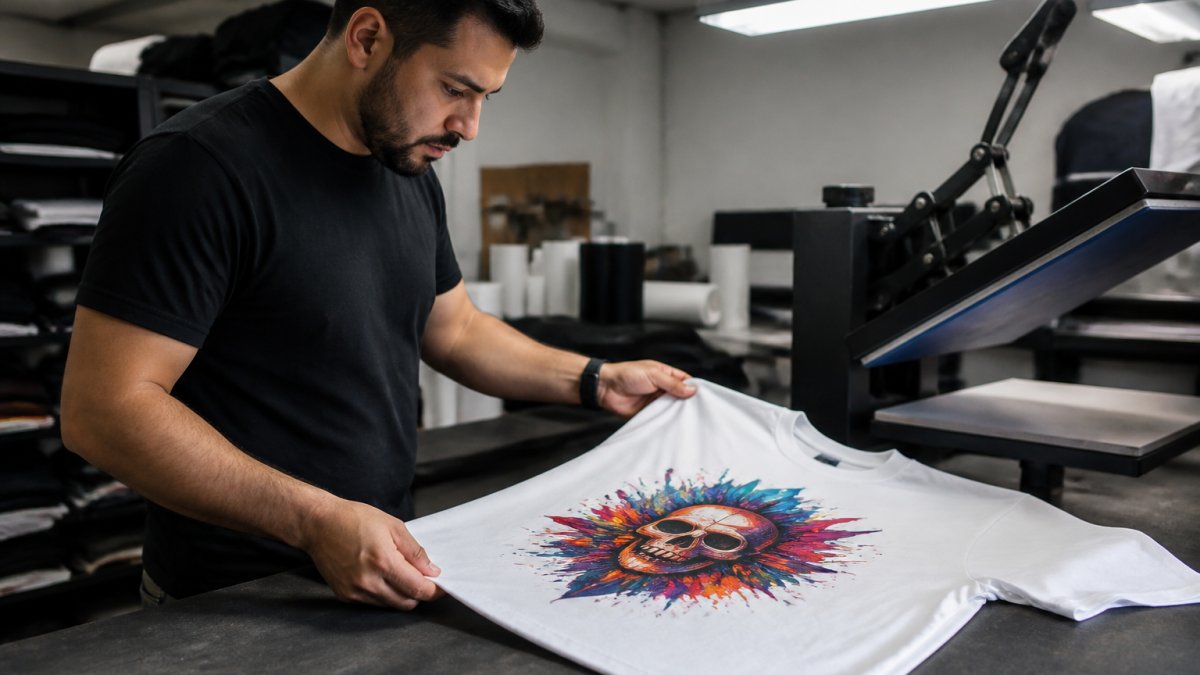
Request a quality-test sample order. Most suppliers will send 5-10 sample transfers at no cost or minimal cost if you ask. Specify that you want samples representing:
- A design with multiple colors (to test color accuracy and vibrancy)
- A design with fine detail or thin lines (to test precision and sharpness)
- A solid-color or large-area design (to test adhesive coverage and consistency)
If possible, request samples from different production batches or different days. This reveals whether quality is consistent or variable.
Establish a documented testing procedure. Use the same procedure for every supplier you evaluate. Document your findings in writing so you can compare results later.
Test 1: Color accuracy and vibrancy (before pressing).
- Print a reference image of your test design on standard office paper or view it on your screen.
- Compare the transfer's colors to the reference under consistent lighting (daylight or a bright LED lamp, not dim overhead light).
- Look for color shifts, especially in skin tones, brand colors, or gradients. Note whether colors appear oversaturated, undersaturated, or shifted toward a different hue.
- Pass criterion: Colors match the reference within acceptable tolerance for your brand standards. If you work with specific brand colors (Pantone or hex codes), compare against those.
- Red flag: Significant color shifts, especially in skin tones or brand-critical colors, indicate inconsistent color management.
Test 2: Fine detail and sharpness (before pressing).
- Examine small text, thin lines, or intricate artwork under magnification (a 10× loupe or smartphone macro lens works).
- Look for blurriness, broken lines, or pixelation that shouldn't be there.
- Pass criterion: Details are crisp and match your original artwork file. Small text (8pt or larger) is legible.
- Red flag: Blurry details or broken lines indicate the supplier's equipment or file processing cannot handle precision work.
Test 3: Adhesive consistency and application (before pressing).
- Examine the back of each transfer under bright light.
- Look for uneven adhesive coverage, bare spots, debris, or banding (horizontal lines or streaks).
- Gently flex the transfer to check whether the adhesive feels evenly distributed.
- Pass criterion: Adhesive is smooth, even, and free of debris across the entire transfer.
- Red flag: Bare spots, heavy debris, or uneven adhesive indicate quality-control problems that will cause pressing failures or poor durability.
Test 4: Durability after pressing and washing (the real-world test).
- Press each sample transfer onto a test garment using your actual heat press, at your standard temperature, pressure, and dwell time. Use the garment type you typically work with (cotton, cotton-poly blend, etc.).
- Allow the garment to cool completely before handling.
- Inspect the pressed transfer for adhesion: try to lift an edge gently. It should not peel or bubble.
- Wash the garment 5-10 times using your typical wash temperature and cycle (warm or cold water, gentle or normal cycle). Dry it the way your customers would.
- After washing, inspect for cracks, peeling, color loss, or fading.
- Pass criterion: Transfer remains adhered and colors remain vibrant after 5-10 washes. No visible cracks or peeling.
- Red flag: Peeling, cracking, or significant fading after 5 washes indicates the transfer will not hold up under customer use. This is a dealbreaker.
Document your results. Create a simple spreadsheet or document for each supplier with columns for:
- Supplier name and date tested
- Color accuracy (pass/fail, notes)
- Fine detail (pass/fail, notes)
- Adhesive consistency (pass/fail, notes)
- Durability after 5 washes (pass/fail, notes)
- Overall recommendation (yes/no/maybe)
This documentation lets you compare suppliers objectively and refer back to your findings if a supplier's quality changes later.
One bad transfer in a batch is normal; consistent problems are not. If 1-2 transfers out of 10 samples have minor issues, that's within normal manufacturing variation. If 3 or more have problems, or if any transfer fails the durability test, move on to the next supplier. Your customers will notice quality problems faster than you will, and the cost of reprints and refunds will exceed any savings on per-transfer pricing.
Cost, Turnaround, and Reliability: What Matters Most
Small shops live or die on three factors: total cost per transfer (not advertised per-unit price), how fast you can get orders, and whether the supplier actually delivers what they promise.
Total cost per transfer, the real number that matters. Advertised pricing can hide the full picture.
Here's how to do it: Pick three order sizes that match your typical workflow, for example, 25 units, 50 units, and 100 units of a single design. For each supplier, request a quote that includes:
- Base transfer cost (per unit or per sheet)
- Setup or file-processing fees
- Shipping cost to your location
- Any minimum order charges or gang-sheet fees if applicable
- Turnaround time at that volume
Then calculate total cost ÷ number of transfers = your real per-transfer cost. A supplier charging $1.50 per transfer with free shipping on a 50-unit order might cost $75 total ($1.50 × 50).
Most small shops find that their sweet spot is 25-75 units per order. At that volume, gang sheets often beat individual transfers, but only if you're consolidating multiple designs.
Turnaround time and its hidden costs. Same-day or next-day production is valuable for rush orders, but it often carries a premium, sometimes 20-40% above standard rates.
Confirm turnaround times in writing before ordering, especially if you're testing a new supplier.
Reliability: the cost of failure. One bad batch costs more than you save on per-transfer pricing.
Ask your network, local apparel groups, online shop communities, or industry forums, which suppliers they've used repeatedly and trust. Ask specifically: Do they hit turnaround promises? Does quality stay consistent batch to batch?
Before committing to regular orders, place a small test order and evaluate not just the transfers themselves, but the entire experience: order clarity, communication, shipping packaging, and how quickly they respond if you have a question.
Frequently Asked Questions
Can small shops order single DTF transfers instead of buying in bulk?
Yes. Many DTF transfer suppliers now offer no-minimum ordering, allowing small shops to purchase individual transfers or small batches. Options like individual transfers and gang-sheet alternatives make it possible to test suppliers or fulfill small custom orders without committing to bulk quantities. This flexibility is essential for one-person operations and boutique apparel businesses managing variable order volumes.
What's the difference between gang sheets and individual DTF transfers?
Gang sheets combine multiple designs on one large sheet, reducing per-design costs for shops with varied artwork. Individual transfers work best for repeat designs or single-item orders. Gang sheets typically cost more upfront but offer better value when you're mixing designs. Individual transfers provide flexibility when you need quick turnarounds or don't have enough volume to fill a sheet efficiently. Choose based on your workflow and how often you repeat designs.
How do you compare DTF transfer quality before placing a large order?
Request sample transfers from each supplier showing fine detail, color vibrancy, and durability. Test them on your heat press using your actual equipment and settings. Check for crisp lines, accurate color reproduction, and adhesive consistency. Wash test samples to verify durability and confirm the transfer doesn't crack, fade, or peel. Ask suppliers about their quality control process and what happens if you receive a bad batch. Independent testing protects you from inconsistent results and costly reprints.
What should a small business look for in a DTF transfer supplier?
Prioritize no-minimum or low-minimum orders, fast turnaround (same-day or next-day if you need it), transparent pricing, and clear reprint policies. Verify print quality handles your design complexity, confirm shipping reliability, and check customer reviews for consistency. A professional, secure ordering platform matters if you're managing multiple jobs. Supplier responsiveness and willingness to troubleshoot issues are equally important, you need a partner who supports small-shop workflows, not just bulk orders.