

Last Updated: October 23, 2026
Quick Summary
DTF sheet vs DTF transfers comes down to production needs: gang sheets hold multiple printed designs on one piece of film for high-volume repeat orders with lower per-transfer costs, while individual transfers are pre-cut designs ready to apply immediately, offering speed and flexibility for mixed orders and small runs.
- Gang sheets typically hold 10, 20, or 50 designs depending on size and layout, requiring cutting before application.
- Individual transfers eliminate the cutting step entirely, reducing labor time by 30-60 seconds per garment.
- DTF transfers survive 50+ wash cycles without significant cracking or fading when applied with correct heat press settings of 320-330°F and 10-15 seconds dwell time.
- Gang sheets offer lower per-transfer material costs at volumes of 500+ units, while individual transfers are more cost-effective for orders under 100-200 units.
- Both formats use identical DTF printing technology, so print quality and color accuracy are the same regardless of sheet format.
Table of Contents
- What DTF Sheets and DTF Transfers Actually Are
- DTF Gang Sheets: Production and Cost Efficiency
- DTF Transfer Pricing: Understanding Per-Unit and Per-Design Costs
- DTF Heat Press Settings and Application Workflow
- DTF Transfer Durability: Wash Performance and Longevity
- DTF Sheets vs. DTF Transfers: Feature Comparison
- Which Option Is Right for Your Business
- Frequently Asked Questions
What DTF Sheets and DTF Transfers Actually Are
Direct-to-film printing has transformed custom apparel production, but understanding DTF sheet vs DTF transfers terminology still confuses buyers. The difference drives the right sourcing decision.
DTF sheets are gang sheets holding multiple printed designs on one piece of transfer film, 10, 20, or 50 designs depending on size and layout.
DTF transfers are individual, pre-cut designs ready to apply directly to a garment.
How Direct-to-Film Printing Works
Direct-to-film technology prints full-color designs onto thin plastic film using CMYK inks plus white ink for opacity on dark fabrics, then applies adhesive powder, cures, and heat-presses.
The white ink layer separates DTF from other transfer methods, providing opacity so DTF transfers work equally well on light and dark fabrics. The adhesive powder bonds ink to film during curing, creating a flexible, durable transfer that moves with the fabric rather than cracking.
DTF Sheet Definition and Use
A DTF sheet is a large piece of transfer film printed with multiple designs arranged to minimize waste, typically 11 x 17 inches or larger.
The advantage is cost per design: 50 identical logos on one sheet drop the material cost per transfer significantly versus 50 individual transfers. The disadvantage is the cutting and weeding step, which adds labor time.
DTF Transfer Definition and Use
A DTF transfer is a finished, ready-to-apply design, cut to size with carrier film attached, requiring only heat-pressing, eliminating the cutting step entirely.
Transfers work best for mixed orders, small runs, or custom one-off jobs. Producing 10 different designs for 10 customers is faster and cleaner with 10 individual transfers than 10 gang sheets you must cut, no waste, no partial-sheet storage, no finishing labor.
DTF Gang Sheets: Production and Cost Efficiency
Gang sheets are the backbone of high-volume DTF production. Understanding where they save money helps you evaluate whether they fit your workflow.
How Gang Sheets Maximize Material Efficiency
Gang sheets pack multiple designs onto one piece of film to reduce waste. An 11 x 17 inch sheet might hold 20 small designs or 4 large ones, arranged with minimal gaps.
The tradeoff is handling time. After printing, each design must be cut from the sheet using a heat knife, rotary cutter, or precision scissors, manageable for small operations, but a bottleneck at high volume.
Batch Production and Waste Reduction
Gang sheets shine in batch production: printing 100 units of the same design across multiple gang sheets in one run minimizes setup time and keeps per-transfer material cost low.
Waste reduction is another advantage. Individual transfer orders sometimes require overproduction for setup and quality control, but gang sheets let you print exactly what you need: 47 designs, not 50.
Storage of partial sheets is a consideration.
DTF Transfer Pricing: Understanding Per-Unit and Per-Design Costs
Pricing for DTF transfers depends on multiple factors. Understanding the cost structure helps you compare quotes against actual production needs.
Cost Factors That Affect Your Bottom Line
Several variables influence DTF transfer pricing: design complexity, ink coverage, order quantity, turnaround time, and whether you're buying gang sheets or individual transfers.
Design complexity matters because high-detail work with fine lines or small text requires higher print resolution, affecting throughput.
Order quantity is the biggest lever: a single transfer costs more per unit than 1,000 because setup costs spread across fewer units.
Turnaround time affects cost: standard turnaround (5-7 business days) is less expensive than rush orders (1-2 business days). Need transfers quickly? Expect a premium.
Scaling Costs: Small Runs vs. Bulk Orders
Small runs of 10 to 50 transfers typically work better as individual transfers.
Bulk orders of 500+ units favor gang sheets for the same design or a coordinated set.
The inflection point varies by supplier and design size.
Pricing depends on quantity, dates, and delivery, so requesting a quote is the best way to compare your options.
DTF Heat Press Settings and Application Workflow
Applying DTF transfers requires precision: temperature, pressure, and timing directly affect durability and print quality.
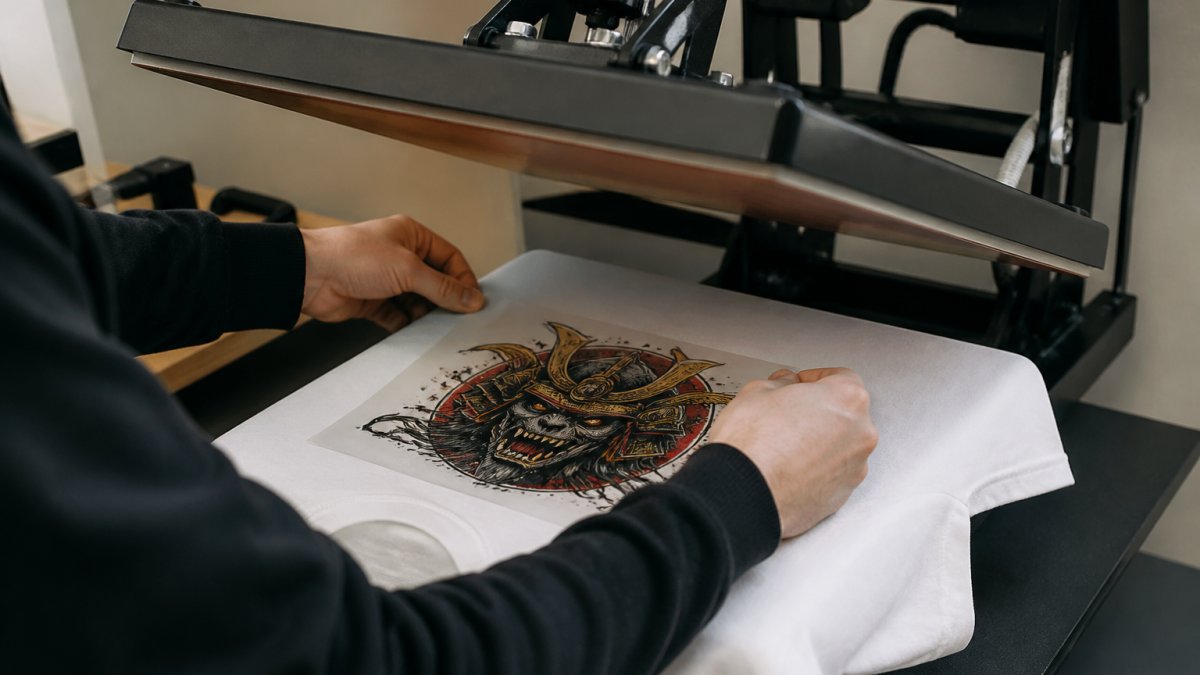
Temperature, Pressure, and Timing Requirements
Standard DTF transfer application uses 320-330°F (160-165°C) with medium-to-firm pressure for 10-15 seconds, activating the hot-melt adhesive and bonding the transfer to the fabric.
Temperature varies slightly by fabric. Cotton and cotton blends tolerate 320°F reliably; polyester handles higher temperatures but risks shine or melting at extreme heat.
Dwell time affects adhesion and design clarity.
Comparing Workflow: Sheets vs. Individual Transfers
Individual transfers skip cutting entirely: you receive ready-to-press transfers, align them, and press. For 100 units, that's 100 pressing operations only.
Workflow efficiency also depends on your equipment. If you have a manual heat press, you're limited by how fast you can position and press each transfer.
DTF Transfer Durability: Wash Performance and Longevity
Durability is where DTF transfers prove themselves. A well-applied transfer should survive 50+ wash cycles without significant cracking or fading when cared for properly.
Adhesive Performance and Cracking Prevention
DTF transfers use hot-melt adhesive powder that bonds the ink to the film during curing. This adhesive must cure completely before washing.
Cracking typically occurs when the adhesive layer becomes brittle from repeated flexing and washing.
Fabric choice affects durability. Cotton and cotton blends provide stable surfaces for adhesion.
Care instructions matter. Washing in cold water, turning garments inside-out, and avoiding the dryer extend transfer life significantly.
Fabric Compatibility and Stretch Tolerance
DTF transfers work on most common fabrics: 100% cotton, cotton-poly blends (50/50, 60/40), and 100% polyester. They also work on nylon and other synthetics, though results vary by specific material.
Stretch tolerance is important for athletic wear and fitted garments. DTF adhesive has some flexibility but isn't designed for extreme stretch.
Fabric weight also plays a role. Lightweight fabrics (jersey knit, t-shirt material) work best.
DTF Sheets vs. DTF Transfers: Feature Comparison
Choosing between gang sheets and individual transfers requires comparing multiple factors beyond just price.
| Factor | DTF Gang Sheets | DTF Individual Transfers |
|---|---|---|
| Setup | Cut each design before pressing | Ready to apply immediately |
| Material cost per unit | Lower at high volumes | Higher for small quantities |
| Labor time | Includes cutting step | Pressing only |
| Design variety | Best for repeat designs | Best for mixed orders |
| Inventory management | Partial sheets require storage | Pre-cut, no storage waste |
| Turnaround time | Longer (includes cutting) | Faster (press only) |
| Order flexibility | Commit to all designs on sheet | Order exactly what you need |
Print Quality and Color Range
Both gang sheets and individual transfers use the same DTF printing technology, so print quality is identical when produced on the same equipment.
Color accuracy depends on printer calibration and ink quality, not whether the design is on a gang sheet or individual transfer.
Fine detail, logos with thin lines, small text, or intricate patterns, prints reliably on both. The resolution and print head technology are what matter, not the sheet format.
Setup Requirements and Equipment Needs
Gang sheets require a cutting tool: a heat knife, rotary cutter, or precision scissors.
Individual transfers require only a heat press and basic garment handling. No additional tools or inventory tracking needed. This simplicity appeals to small operations and one-person businesses.
Both require a quality heat press with temperature and pressure control. A basic manual press (around $200-400) works for small volumes.
Turnaround Time and Production Speed
Gang sheets add 1-2 days to your turnaround because you must cut designs before pressing. If you order gang sheets on Monday, you might receive them Wednesday, cut them Thursday, and press them Friday.
Individual transfers ship ready-to-press. If you order Monday, you receive them Wednesday and press them immediately. The two-day difference is meaningful for time-sensitive orders.
Production speed (garments per hour) depends on your heat press and labor. Manual presses handle 20-30 garments per hour. Conveyor presses can reach 60+ per hour.
Which Option Is Right for Your Business
Your production model determines which format serves you best. Evaluate your typical order patterns, production volume, and available labor.
DTF Sheets for In-House Production and High Volumes
Gang sheets make sense if you're printing the same design repeatedly or managing a coordinated set of designs for bulk orders.
In-house production also favors gang sheets because you control the cutting schedule and can batch the work. Cutting 100 designs takes an hour or two but happens in one focused session rather than interrupting your pressing workflow.
Contact us for a quote on your specific volume and design specifications.
DTF Transfers for Outsourced Printing and Flexibility
Individual transfers are ideal if you're outsourcing production and need maximum flexibility.
Freelance decorators and small shops benefit from individual transfers because they eliminate the cutting step and reduce inventory burden. You order what you need, press it, and move to the next job.
Individual transfers also work better for short-turnaround custom orders where the customer doesn't want to wait for you to cut gang sheets.
Hybrid Approach: When to Use Both
Many businesses use both formats strategically. High-volume repeat orders go to gang sheets for cost efficiency. Custom or small orders use individual transfers for speed and simplicity.
This hybrid approach requires partnering with a supplier who offers both options reliably. You need confidence that your gang sheet orders arrive on schedule and that your individual transfer orders don't compromise quality for speed.
Choosing between DTF sheets and DTF transfers comes down to your order patterns, production volume, and labor capacity. Many successful businesses use both, optimizing each format for its strongest use case. Mirage DTF Transfers offers both options with the quality and reliability your business needs.
Frequently Asked Questions
What is the difference between a DTF sheet and a DTF transfer?
A DTF sheet is a large printed film that you cut and weed yourself, containing multiple designs or gang sheets that maximize material efficiency. A DTF transfer is a pre-cut, ready-to-press individual transfer that arrives finished and requires no preparation. DTF sheets require in-house equipment and labor; DTF transfers are sourced from a supplier and applied directly to garments. The choice depends on your production volume, equipment investment, and labor availability.
Which is more cost-effective: DTF sheets or individual DTF transfers?
DTF transfer pricing depends on order volume and supplier. For high-volume production (500+ units regularly), DTF sheets reduce per-unit material costs through batch production and gang sheet efficiency. For small runs or variable orders, DTF transfers eliminate equipment investment and minimize waste. Calculate your typical order size and production frequency; smaller shops often find transfers more cost-effective overall when accounting for equipment, labor, and material waste.
How long do DTF transfers last on clothing after washing?
DTF transfer durability typically exceeds 50 wash cycles when applied correctly with proper heat press settings (typically 320-330°F for 8-10 seconds). Durability depends on adhesive quality, fabric type (cotton and cotton-blend garments perform best), proper curing time, and wash care. Polyester and stretch fabrics may show slight cracking if pressed at excessive temperatures or if the wearer uses high heat in the dryer.
What equipment do you need to use DTF sheets versus DTF transfers?
DTF sheets require a DTF printer, curing oven or conveyor dryer, weeding tools, and a heat press, a significant capital investment. DTF transfers require only a heat press and basic application tools (squeegee, peel film). If you source ready-to-press transfers from a supplier, you eliminate the printer and curing step entirely. For small businesses or those testing the market, outsourcing to a transfer supplier eliminates upfront equipment costs while maintaining professional print quality.
