

Table of Contents
- PrintPlace vs Axo Transfers: Service Overview
- DTF Transfer Quality and Print Feel
- Bulk DTF Prints: Order Minimums and Customization
- DTF Transfer Turnaround Time and Shipping Speed
- DTF Transfer Pricing and Cost Comparison
- Color Vibrancy, Durability, and Wash Resistance
- Ordering Process, Artwork Upload, and Customer Support
- Which Service Should You Choose?
- Frequently Asked Questions
Last Updated: October 18, 2026
PrintPlace vs Axo Transfers: Service Overview
When you're scaling custom apparel production without DTF equipment, choosing among DTF transfer companies matters. PrintPlace and Axo Transfers both offer direct-to-film transfers but serve different business models.
Both handle bulk DTF prints for screen printers, e-commerce stores, and promo distributors. The question isn't whether they offer transfers, but whether their execution, minimums, and pricing fit how you operate.
What separates a supplier that scales with you from one that creates friction: consistent print quality, transparent pricing, realistic turnaround, and responsive support.
DTF Transfer Quality and Print Feel
A quality DTF transfer sits smooth on fabric, no stiffness, adhesive residue, banding, or inconsistent ink coverage, with crisp detail on fine lines and small logos.
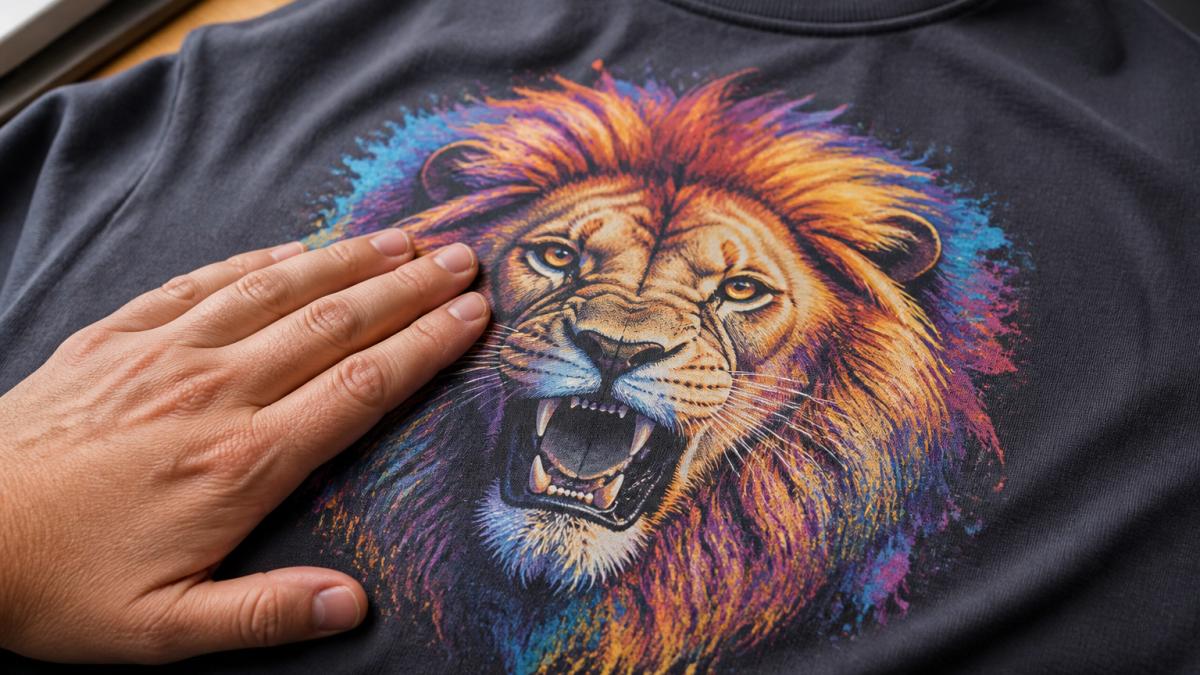
PrintPlace emphasizes batch-to-batch consistency in adhesion and color saturation. Hand feel runs slightly firmer than some alternatives.
Axo Transfers positions quality as a core strength, with a softer hand feel, smoother finish, and minimal adhesive residue.
The difference comes down to your typical order: PrintPlace's consistency wins on large graphics in bulk runs; Axo edges ahead on detailed custom work.
Bulk DTF Prints: Order Minimums and Customization
Order minimums reveal a supplier's true audience. PrintPlace keeps minimums accessible for small shops and one-person operations.
Axo also accommodates smaller orders, though mid-sized batches are its sweet spot. Flexible sizing and custom dimensions suit varied garment types and unusual applications.
The key variable is custom sizing: PrintPlace offers standard sizes with reasonable customization, while Axo provides more granular dimension control.
For orders under 50 units, both work but neither is built for that volume.
DTF Transfer Turnaround Time and Shipping Speed
PrintPlace typically quotes 5-7 business days for standard orders, with rush options; shipping is separate and depends on location and speed tier.
Axo often runs 3-5 business days for standard production, with tighter shipping integration and multiple speed tiers.
The gap narrows once shipping is factored in: a 3-day producer with slow shipping matches a 7-day producer with fast shipping. What matters is total order-to-door time, not production time alone.
Both have seen peak-season delays, that's industry-wide. What separates them is communication and compensation when delays happen.
DTF Transfer Pricing and Cost Comparison
Most DTF pricing pages, including both services', quote a per-transfer rate that hides the variables driving your invoice. A meaningful review must normalize those variables first. Here's the like-for-like method we use, plus the cost components to extract before committing volume.
The like-for-like quote method
Request quotes from both services using an identical order profile so the only difference is the supplier. A reproducible profile looks like this:
- Artwork: one 10 in × 12 in full-color design and one 3 in × 3 in left-chest design, both supplied as 300 DPI PNG with transparent background.
- Quantity tiers: quote 25, 100, 250, and 500 transfers of each design.
- Size: standard adult front print; note any custom-dimension upcharge separately.
- Finish: standard DTF powder adhesive; ask whether matte or gloss finish changes the rate.
- Shipping destination: one commercial address in the same ZIP code for both quotes, so freight is apples-to-apples.
- Speed: standard production and the fastest rush tier, quoted separately.
- Date: record the quote date, DTF film and powder costs move, and a quote older than 30 days is not reliable for comparison.
Ask each supplier to itemize: per-transfer base rate, setup or artwork fee, custom-size upcharge, rush fee, freight, and tax. A supplier that won't break out freight and setup in writing is hiding the comparison.
Cost components that change the answer
- Setup and artwork fees. Some suppliers charge a one-time setup per design; others fold it into the per-transfer rate. On a 25-piece order a $25 setup fee adds $1.00 per transfer; on 500 pieces it adds $0.05. Always compare at the quantity you actually order.
- Custom sizing. Non-standard dimensions often carry a per-transfer upcharge. Ask for the upcharge at 2 in, 4 in, 8 in, and 12 in widths so you can model mixed-size orders.
- Rush production vs. expedited freight. These are separate line items. A supplier with fast standard production but slow freight can lose to a slower producer with better shipping integration. Quote both and compare total order-to-door time, not production time alone.
- Freight and packaging. DTF transfers ship flat or rolled; rolled shipments can reduce dimensional-weight charges on large orders. Ask how each service packs 250+ transfers and whether packaging affects the freight class.
- Payment terms and reorder pricing. Ask whether reorders of the same artwork skip setup, and whether net terms are available at volume. Repeat-order pricing is often where the real per-unit difference shows up.
How to read the result
Build a total-cost-per-transfer table for each quantity tier: (base rate × quantity + setup + size upcharge + rush + freight + tax) ÷ quantity. The lower number at your actual order size wins, not the lower advertised base rate. Often one service wins at small quantities by waiving setup while the other wins at 250+ through faster rate scaling; only the quote tells you which applies.
What neither service publishes
Neither of these DTF transfer companies publishes a full rate card with setup, custom-size upcharges, and freight in one place, so a public side-by-side table would mislead. The honest comparison is your own itemized quote using the profile above. Treat any review quoting a single per-transfer number without quantity, size, freight destination, and quote date as unusable for budgeting.
Color Vibrancy, Durability, and Wash Resistance
Durability claims are easy to make and hard to verify. Instead of repeating 'holds color well,' run a controlled test on a small order from each service and score both against the same rubric. Here's the protocol, the failure modes, and how to interpret results.
The controlled test protocol
Order the same artwork from both services on the same garment blank, a 100% cotton tee in white and a dark heather or black tee, at the same size and quantity. Then:
- Baseline inspection. Photograph each transfer on the garment under consistent lighting (daylight-balanced, same distance, same background). Note hand feel on a 1-5 scale from soft to stiff, and check for banding, missing ink, or adhesive residue around the edges.
- Application. Press each transfer at the temperature, pressure, and dwell time the supplier specifies, do not use one setting for both, since the correct settings differ. Record the settings used.
- Wash cycles. Wash each garment through 10 home laundry cycles at the care-label temperature, inside out, with a standard detergent, and tumble dry low between cycles. Photograph after cycles 1, 5, and 10.
- Score each cycle on four criteria: color shift (compare to baseline photo), cracking (visible fissures in the ink film), edge lift or peeling, and hand-feel change (does the print stiffen or soften).
- Stretch and abrasion check. After the final wash, stretch the printed area gently and rub the print with a dry cloth to see whether the ink film delaminates.
What 'pass' looks like
A transfer that passes shows no visible color shift at cycle 10, no cracking beyond hairline surface texture, no edge lift, and a hand feel that has not stiffened noticeably. A transfer that fails shows color fade on dark garments, cracking along fold lines, or peeling at the edges, any of which means the adhesive or ink film is not bonding correctly to that fabric.
Failure modes to name in your notes
- Cracking along fold lines, the ink film is too thick or the adhesive is under-cured; common on large solid-color prints.
- Edge lift, the transfer was trimmed too close to the ink or pressed at too low a pressure.
- Color fade on dark garments, the white underbase is too thin; the print looks vibrant initially and grays out after several washes.
- Hand-feel stiffening, excess powder adhesive or over-pressing; the print feels like a plastic patch after washing.
- Residue halo, adhesive extends past the ink edge and picks up lint; usually a trimming or powder-application issue.
How to interpret the result
Score both services on the same rubric and compare the cycle-10 photos side by side. A common pattern is that one service produces a slightly softer hand feel out of the bag but shows more hand-feel stiffening after washing, while the other starts firmer and holds its feel. Neither outcome is automatically better, it depends on whether your customers prioritize softness or longevity. The point is that you now have evidence instead of a marketing claim.
What to ask each supplier before you test
Ask for the recommended press temperature, pressure, and dwell time for the specific garment you're using, and whether they recommend a cold or hot peel. Ask what their policy is if a batch fails your wash test, replacement, credit, or refund, and get the answer in writing. A supplier that stands behind its transfers will give you a clear replacement policy; one that deflects to 'application error' without reviewing your settings and photos is telling you something about how they'll handle a real quality issue.
Ordering Process, Artwork Upload, and Customer Support
PrintPlace uses a straightforward upload process: submit artwork, confirm specifications, checkout. The interface is functional rather than elegant.
Axo has invested in a more polished platform: clearer artwork preview, visual sizing adjustments, and a smoother checkout.
Support is where operational differences emerge. PrintPlace responds to inquiries, though response time varies; Axo emphasizes proactive communication and faster resolution.
Ask both: what's your average support ticket response time? Do you offer reorders on defective batches? What's your quality-issue process?
Which Service Should You Choose?
PrintPlace suits predictable, transparent pricing, consistent quality, and straightforward ordering, reliable for regular production runs where predictability beats speed, with accessible minimums for smaller shops.
The honest answer: both are competent. The right choice depends on whether you value speed and interface polish (Axo) or pricing transparency and simplicity (PrintPlace).
Test both with a small order before committing volume. Quality, turnaround, and support are claims that need verification.
Frequently Asked Questions
What should I compare when choosing a DTF transfer supplier?
Evaluate print quality (sharpness, color accuracy, and durability), turnaround time and shipping speed, order minimums and bulk DTF prints flexibility, pricing structure, customization options (sizing and artwork adjustments), and customer support responsiveness. Test a small order first to assess consistency before committing to larger volumes.
How do PrintPlace and Axo Transfers differ in DTF transfer turnaround time?
Both services offer standard and rush production options. Standard turnaround typically ranges from 3-5 business days, while rush service can compress this to 1-2 business days at a premium cost. Shipping time varies based on your location and carrier selection. Contact each service directly for current production schedules and shipping estimates for your specific order.
What's included in DTF transfer pricing for bulk orders?
Pricing typically covers the transfer material, printing, and basic handling. Most suppliers charge per unit, with volume discounts for larger orders. Shipping, rush fees, and custom sizing may incur additional costs. Request a detailed quote that breaks down per-unit cost, minimum order requirements, and any applicable discounts for your order volume.
Can small shops or one-person operations order from best DTF transfer companies?
Yes, but order minimums vary by supplier. Some services accommodate orders as small as 10-25 units, while others require higher minimums. Check each company's minimum order policy and whether they offer flexible reorder options. Small-batch suitability depends on your production volume and the supplier's willingness to serve smaller accounts.
At Mirage DTF Transfers, we understand that choosing a transfer supplier is about more than comparing features. It's about finding a partner that scales with your business, delivers consistent quality, and supports your growth. We're here to help you manage your production efficiently with secure, professional solutions built for businesses like yours. Contact us to discuss your custom transfer needs and discover how we can streamline your production workflow.