

Table of Contents
- What DTF Transfer Quality Control Standards Mean for Your Business
- Core Quality Metrics: Visual Fidelity, Adhesion, and Durability
- DTF Wash Test Standards: Industry Benchmarks and Protocols
- Common DTF Printing Defects and How to Identify Them
- Best Practices for DTF File Preparation and Heat Press Settings
- Standardized Testing Equipment and Quality Assurance Workflow
- Environmental Impact and Sustainability in DTF Quality Standards
- Building a Quality Control System for Your Operation
- Frequently Asked Questions
Last Updated: October 2, 2026
What DTF Transfer Quality Control Standards Mean for Your Business
Direct-to-film (DTF) transfer quality control standards establish the benchmarks that separate professional-grade prints from inconsistent output. The difference between a transfer lasting 50 washes and one failing after 5 comes down to how rigorously you apply quality control during production.
DTF transfer quality control encompasses file preparation, ink application, curing temperature, adhesion strength, and wash durability. Without standardized testing protocols, you're guessing whether transfers will perform in the field.
Custom apparel buyers expect prints that hold up through dozens of washes without cracking, peeling, or fading. Establishing a formal quality control system is the foundation of sustainable growth in the custom apparel space.
Core Quality Metrics: Visual Fidelity, Adhesion, and Durability
Three core metrics define whether a DTF transfer meets professional standards: how sharp the image appears, how strongly it bonds to fabric, and how long it survives repeated washing.
Print Resolution and Visual Fidelity Standards
Print resolution directly determines whether fine details survive the transfer process. Minimum 1200 DPI output maintains visual fidelity; below that, details blur and text becomes illegible.
Visual fidelity requires color accuracy and opacity. Pigment concentration must deliver true blacks and vibrant colors. Many shops experience color shift because they haven't calibrated their color management workflow; lower-quality films scatter light and reduce saturation.
Test visual fidelity by printing a reference image and comparing it to the digital original under consistent lighting. If noticeably lighter or muted, adjust ink concentration or film quality. Maintain a reference library for team consistency.
Adhesion and Peel Strength Testing
Adhesion strength determines whether a transfer stays bonded or peels during washing. The industry standard is a 90-degree peel test: lift one corner at 90 degrees and measure the force required to separate it from fabric.
A professional-grade transfer requires at least 2-3 pounds of force per linear inch to peel. Binder integrity, the adhesive layer bonding pigment to fabric, determines this strength. Low heat press temperature prevents full binder cure; excessive temperature damages the film or scorches fabric.
Pressure matters equally. Insufficient pressure prevents full fabric contact and compromises adhesion. Test by systematically varying temperature and pressure in small increments (5°F or 5 PSI) and retesting adhesion.
Wash Durability and Color Vibrancy
A transfer surviving 50 commercial washes without fading, cracking, or peeling is industry standard. Color vibrancy degradation reveals whether pigment concentration, ink chemistry, and heat-press settings work together properly.
Conduct wash tests using AATCC Test Method 61. Wash samples at 130°F with standard detergent. Evaluate visually after 5, 10, 25, and 50 cycles. Any visible cracking, peeling, or fading before 25 washes indicates quality failure.
Causes are usually insufficient curing time, inadequate pressure, or incompatible fabric. Systematic wash testing isolates the variable causing failure.
DTF Wash Test Standards: Industry Benchmarks and Protocols
Wash testing is the most objective measure of transfer performance. It's also where many shops cut corners because testing takes time and resources.
Standard Testing Procedures
Apply transfers to fabric samples using standard settings, cure fully, then wash under controlled conditions. Use the same detergent, water temperature, and cycle for comparable results.
Test five samples per batch. Document appearance before and after 5, 10, 25, and 50 cycles. Photograph under consistent lighting. Note cracking, peeling, fading, or binder breakdown.
Test at 130°F (standard commercial laundry temperature) unless customers use cold water. Document results at both temperatures if needed.
Standard laundry detergent works for baseline testing. Document detergent brand, water temperature, wash cycle, and drying method.
Interpreting Test Results
Transfers with no visible cracking or peeling after 50 washes pass durability testing. Color shift under 5% is acceptable. Edge peeling before 25 washes indicates adhesion failure. Noticeable fading by 10 washes indicates pigment or ink chemistry issues.
Create a pass/fail matrix: transfers completing 50 washes without defects are production-ready. Failures before 25 washes require investigation. Systematic testing builds institutional knowledge.
Common DTF Printing Defects and How to Identify Them
Most quality failures fall into three categories: visual defects (cracking, peeling, fading), adhesion problems (transfers lifting or separating), and consistency issues (some transfers pass, others fail without obvious reason).
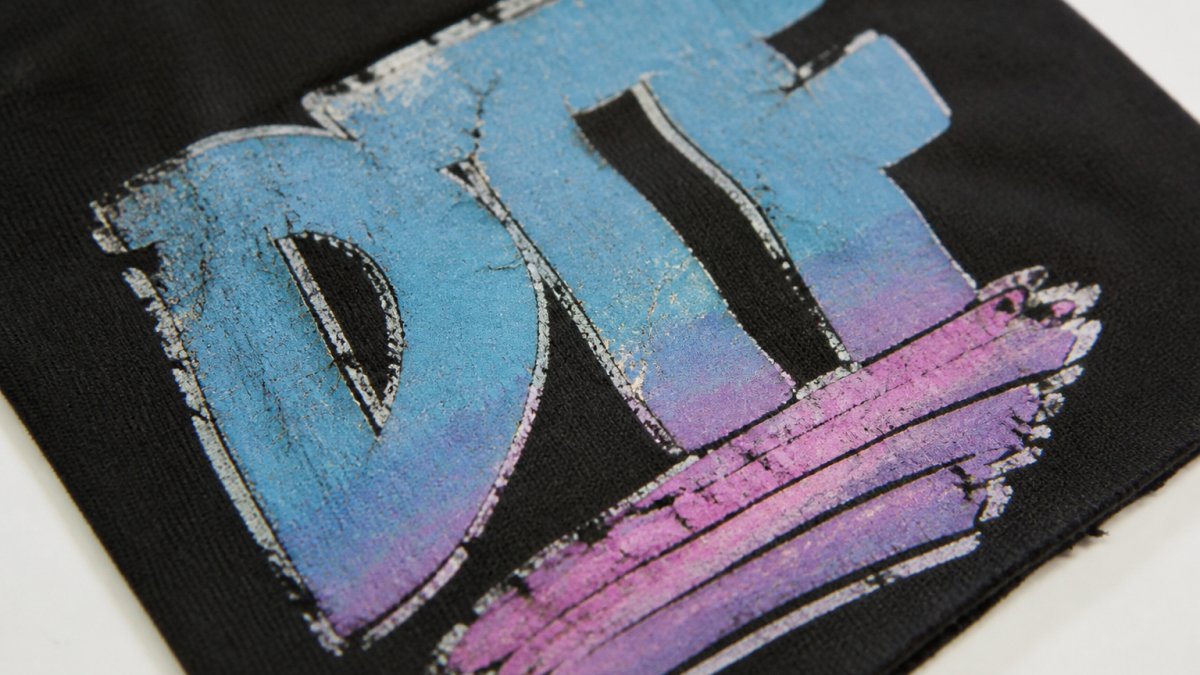
Cracking, Peeling, and Fading Issues
Cracking appears as fine lines starting at corners or edges, indicating brittle binder from insufficient curing or incompatible fabric. Polyester-heavy blends cause this because fabric stretches but the rigid binder cannot flex.
Adhesion Failures and Binder Integrity Problems
Binder integrity is the adhesive layer holding pigment to fabric. Degradation signs: powdery or chalky feel (pigment flaking), large-section peeling, or ink separating from film during application.
Troubleshooting Guide for Failed Quality Tests
When transfers fail wash testing:
Cracking before 25 washes: Increase dwell time 3-5 seconds. If persistent, increase temperature 5°F. Test on different fabric to isolate process vs. substrate issues.
Best Practices for DTF File Preparation and Heat Press Settings
Your file preparation and heat press calibration determine whether your transfers have any chance of passing quality tests. These two areas account for the majority of defects shops encounter.
File Resolution and Color Management
Start with minimum 1200 DPI artwork for crisp details. If customers provide low-resolution files, upscale using interpolation. Set expectations clearly: low-resolution files produce lower-quality transfers.
Temperature, Pressure, and Dwell Time Optimization
Heat press temperature should be 305-320°F for most DTF transfers. Use an infrared thermometer to measure actual platen temperature; many presses run 10-15°F cooler than displayed.
Standardized Testing Equipment and Quality Assurance Workflow
Basic tools provide measurable, repeatable data: commercial washing machine, standard detergent, color reference chart, and infrared thermometer ($20-30). A spectrophotometer ($500-2000) quantifies color data, but visual comparison works for most shops.
Environmental Impact and Sustainability in DTF Quality Standards
DTF printing's environmental footprint depends on ink chemistry, energy use, and waste management. As quality standards evolve, sustainability considerations are becoming part of the conversation.
Building a Quality Control System for Your Operation
A formal quality control system transforms DTF transfer quality control from guesswork into repeatable, measurable process. Start small and expand as you grow.
| Quality Metric | Test Method | Passing Criteria | Frequency |
|---|---|---|---|
| Print Resolution | Visual inspection | 1200 DPI minimum, sharp text | Every job |
| Adhesion Strength | 90-degree peel test | 2-3 lbs/inch force required | Monthly samples |
| Wash Durability | AATCC 61 protocol | No cracking/peeling at 50 washes | Monthly samples |
| Color Vibrancy | Visual comparison to reference | Less than 5% shift after 50 washes | Monthly samples |
| Binder Integrity | Physical examination | No flaking or powdering | Monthly samples |
Frequently Asked Questions
What is the best resolution for DTF transfers to meet quality control standards?
Most quality DTF transfer standards recommend a minimum of 300 DPI (dots per inch) for detailed graphics and 240 DPI for larger designs. Higher resolution ensures visual fidelity and prevents pixelation or blurring, especially on intricate logos or fine text. File preparation at the correct resolution is critical before heat press application to maintain print consistency and avoid quality defects during the transfer process.
How many washes should a DTF transfer withstand according to industry standards?
Industry benchmarks typically require DTF transfers to maintain color vibrancy and structural integrity for a minimum of 50 home washes (or equivalent commercial wash cycles). Premium quality transfers often exceed 75-100 washes. Wash durability depends on proper adhesion strength, ink absorption, and binder integrity during production. Testing protocols simulate these conditions to verify compliance with quality control standards before transfers reach customers.
What are the most common signs of poor DTF transfer curing?
Poor curing typically manifests as cracking, peeling, or reduced adhesion strength immediately after application or after the first few washes. Additional signs include banding (uneven color distribution), fading, or a tacky feel on the fabric surface. These defects indicate insufficient dwell time, incorrect heat press temperature, or inadequate pressure during application. Proper curing temperature and pressure settings are essential quality control parameters that prevent these failures.
How do you test for proper adhesion and stretchability in DTF prints?
Adhesion is tested using peel strength protocols where the transfer edge is lifted at a 180-degree angle to measure force required for separation. Stretchability testing involves stretching the fabric and observing whether the print cracks or maintains flexibility. Both tests should be performed after multiple wash cycles to ensure durability. Industry standards define acceptable ranges for peel strength (typically 2-4 pounds per inch) and require transfers to flex without cracking on performance fabrics.
What role does film coating and pigment concentration play in DTF quality?
Film coating affects ink absorption and transfer efficiency, directly impacting color vibrancy and print consistency. Pigment concentration determines opacity, color saturation, and wash durability. Higher pigment concentration generally improves color vibrancy but must be balanced to prevent over-saturation and substrate compatibility issues. Quality control standards monitor both parameters to ensure each transfer batch meets visual fidelity and durability benchmarks.
What is the difference between hot-peel and cold-peel DTF transfers in quality standards?
Hot-peel transfers are removed from the fabric while the adhesive is still warm, typically within 3-5 seconds of heat press application. Cold-peel transfers cool completely before removal. Hot-peel generally offers better adhesion strength and faster production but requires precise timing. Cold-peel is more forgiving but may have slightly lower peel strength if not cured properly. Quality standards apply to both methods, though testing protocols may differ based on peel method used.
How do you ensure substrate compatibility doesn't compromise DTF transfer quality?
Substrate compatibility testing involves applying transfers to different fabric types (cotton, polyester, blends, performance fabrics) and evaluating adhesion, color accuracy, and durability across each. Quality control standards require transfers to maintain consistent performance across common apparel substrates. Factors like fabric weave, fiber content, and finish affect ink absorption and binder integrity. Comprehensive testing prevents quality failures when transfers are applied to unexpected fabric types in production.