

Last Updated: October 25, 2026
Quick Summary
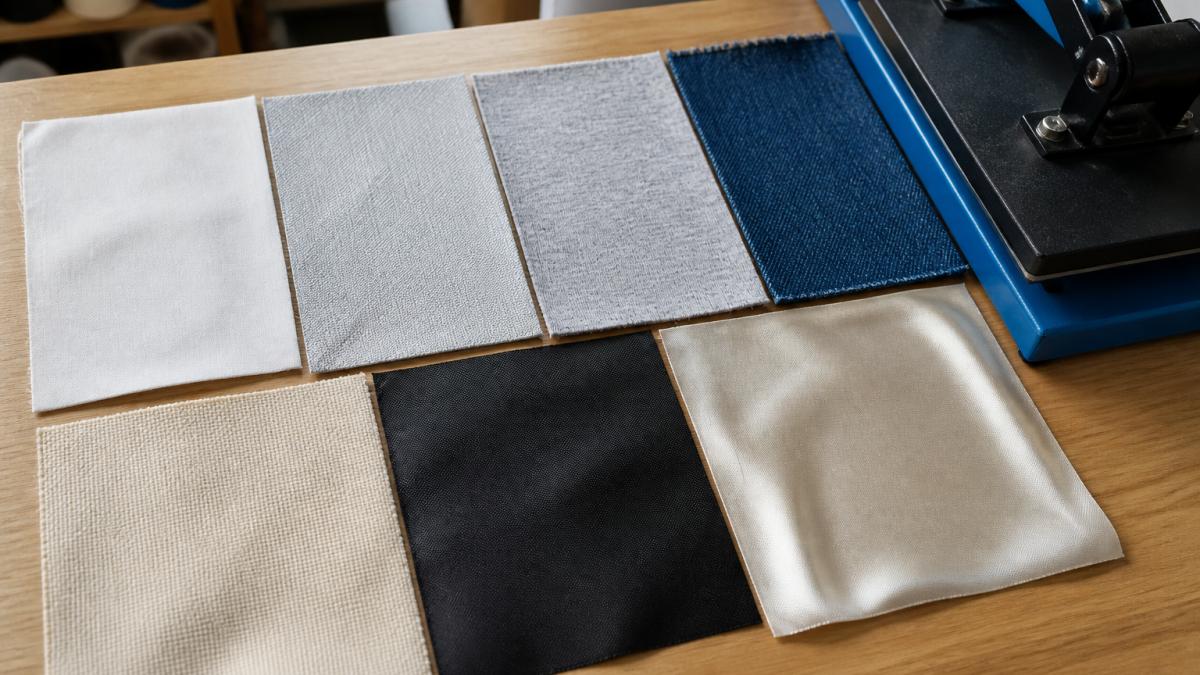
The seven best fabrics DTF transfers work on are 100% cotton, polyester, cotton-polyester blends, denim, canvas, nylon, and silk. Each fabric requires different heat settings and press times, with cotton and blends offering the most reliable results for standard apparel while synthetics like polyester and nylon deliver superior durability and color vibrancy.
- 100% cotton is the industry standard for DTF transfers, accepting adhesive evenly and holding fine detail reliably.
- Polyester produces the brightest, most vibrant DTF prints and resists fading better than cotton over time.
- Cotton-polyester blends combine comfort with durability and are the safest choice for mixed-use merchandise.
- Denim and canvas require higher heat (350-380°F) and longer press times (10-15 seconds) due to their thickness.
- Silk produces the deepest color saturation and sharpest detail but requires the lowest heat (250-280°F) and careful handling.
Table of Contents
- Seven Fabrics That Deliver Superior DTF Transfer Results
- DTF Transfer Fabric Compatibility: What Matters Most
- DTF Transfer Temperature and Time by Fabric Type
- How to Press DTF Transfers for Maximum Adhesion
- Fabrics to Avoid for DTF Transfers
- Selecting the Right Fabric for Your DTF Project
- Frequently Asked Questions
Seven Fabrics That Deliver Superior DTF Transfer Results
Direct-to-film transfers work best on certain fabrics, and fabrics DTF transfers require careful material selection. The material you choose determines how crisp your prints look, how long they last, and whether they crack or fade after washing.
Not all fabrics bond equally with DTF adhesive powder, which is why understanding how fabrics DTF transfers perform is essential. Some absorb heat beautifully. Others repel it.
1. 100% Cotton: The Industry Standard
100% cotton is the most reliable fabric for DTF transfers. It accepts adhesive evenly, holds fine detail, and produces vibrant color. Most custom apparel shops start here because results are predictable.
Cotton's smooth surface lets ink sit on top without bleeding. The natural fiber absorbs heat without scorching. This combination makes it forgiving for new operators still dialing in their press settings.
Ringspun cotton performs even better than standard cotton. The yarn is smoother, creating a tighter weave that captures finer details. Expect sharper logos and crisper text on ringspun garments.
Watch out: Heavily starched cotton can trap adhesive powder on the surface instead of bonding it to the fiber. Wash new cotton items before pressing to remove excess starch.
2. Polyester: Durability and Vibrancy
Polyester fabrics produce the brightest, most vibrant DTF prints. The synthetic fiber reflects light differently than cotton, making colors pop. Polyester also resists fading better than cotton over time.
Polyester requires lower heat than cotton. Press too hot and the fibers melt or become shiny. The sweet spot is typically 30-50 degrees lower than your cotton settings.
Polyester's smooth surface means less adhesive powder sticks initially. This isn't a problem, the powder bonds during pressing. But you'll need to apply powder more deliberately to avoid bare spots.
Polyester works well for athletic wear, bags, and outdoor gear. These items benefit from polyester's durability and moisture-wicking properties.
3. Cotton-Polyester Blends: The Balanced Choice
Cotton-polyester blends combine the best traits of both fibers. You get cotton's comfort with polyester's durability. Blends typically run 50/50 to 65/35 cotton-to-polyester.
Blends require middle-ground heat settings. They're more forgiving than pure polyester but need slightly more heat than 100% cotton. Start at a temperature between your cotton and polyester settings, then test.
Blends hold adhesive well and resist cracking better than 100% cotton. The polyester content adds stretch recovery, reducing print damage when the garment flexes.
Most blank apparel manufacturers default to blends because they balance cost, comfort, and performance. If you're unsure what fabric a customer wants, blends are a safe recommendation.
4. Denim: Bold Prints on Heavy Fabric
Denim accepts DTF transfers well because its tight weave holds adhesive firmly. The heavy weight means prints won't crack even with aggressive movement or flexing.
Denim requires more heat and longer press time than lighter fabrics. The thickness prevents heat from reaching the surface quickly. You're looking at 350-380°F for 10-15 seconds, compared to 300-330°F for cotton.
Prints on denim stay vibrant through many washes. The indigo dye doesn't fade as easily as lighter fabrics. This makes denim ideal for logo wear that needs to look professional after months of use.
Watch out: Over-pressing denim causes the adhesive to over-cure and become brittle. Test on scrap fabric first. The print should feel flexible, not stiff.
5. Canvas: Durability for Totes and Bags
Canvas is ideal for promotional bags, totes, and heavy-duty merchandise. The tight weave and weight provide excellent adhesion for DTF transfers.
Canvas requires similar heat to denim but often needs longer press time. The thickness demands patience. Under-pressing leaves adhesive powder unbonded and transfers wash out quickly.
Canvas doesn't stretch. This eliminates cracking from garment flex. Prints on canvas bags can last for years of daily use without visible wear.
The downside: Canvas is stiff and uncomfortable against skin. It works perfectly for bags but feels rough as a shirt fabric.
6. Nylon: Smooth Surfaces and Fine Detail
Nylon produces the sharpest, most detailed DTF transfers. The smooth synthetic surface captures fine lines, small text, and intricate designs better than any natural fiber.
Nylon requires lower heat than cotton. The synthetic fibers melt easily. Press at 280-310°F, watching carefully to avoid shine or damage.
Nylon resists moisture and drying, making it ideal for athletic wear and outdoor gear. Transfers on nylon maintain color and adhesion through sweat and rain.
Watch out: Nylon can trap heat internally. Press time needs to be shorter than you'd use on cotton to avoid over-curing. Test with small samples before committing to full production runs.
7. Silk: Premium Softness and Color Depth
Silk produces the most luxurious feel and deepest color saturation. Colors appear richer on silk than on any other fabric. This makes silk ideal for premium merchandise and high-end apparel.
Silk requires the lowest heat of all fabrics. Press at 250-280°F for 8-12 seconds. The delicate fibers damage easily if exposed to excess heat.
Silk's smooth surface accepts fine detail beautifully. Logos and artwork appear crisp and refined. The natural sheen of silk makes prints look embedded rather than applied on top.
The challenge: Silk is expensive and requires careful handling. Customers expect perfection on silk items. Test extensively before producing for clients.
DTF Transfer Fabric Compatibility: What Matters Most
Fabric compatibility with DTF transfers depends on three factors: fiber content, surface texture, and heat tolerance.
Fiber content determines how adhesive powder bonds. Natural fibers like cotton accept powder readily. Synthetic fibers like polyester and nylon require precise heat control to bond properly.
Surface texture affects detail capture. Smooth fabrics (silk, nylon, polyester) hold fine lines. Textured fabrics (denim, canvas) diffuse detail slightly but hold adhesion better.
Heat tolerance sets your press parameters. Delicate fibers like silk melt at lower temperatures. Heavy fibers like denim and canvas need sustained heat to bond adhesive throughout the fabric depth.
| Fabric Type | Best Heat Range | Press Time | Best For |
|---|---|---|---|
| 100% Cotton | 300-330°F | 8-12 seconds | T-shirts, apparel |
| Polyester | 250-300°F | 8-12 seconds | Athletic wear, bright colors |
| Cotton-Polyester Blend | 290-320°F | 8-12 seconds | Standard apparel, versatile |
| Denim | 350-380°F | 10-15 seconds | Jackets, workwear |
| Canvas | 340-370°F | 12-15 seconds | Bags, totes |
| Nylon | 280-310°F | 8-10 seconds | Athletic wear, outdoor gear |
| Silk | 250-280°F | 8-12 seconds | Premium merchandise |
DTF Transfer Temperature and Time by Fabric Type
Getting temperature and time right prevents adhesion failure and print cracking.
Cotton sits in the middle of the heat spectrum. Start at 315°F for 10 seconds.
Polyester needs lower heat because synthetic fibers melt. Start at 280°F for 10 seconds.
Blends split the difference. Treat them like cotton but drop temperature 10-15 degrees. Most blends press well at 300-310°F for 10 seconds.
Heavy fabrics like denim and canvas need sustained heat. The thickness slows heat penetration. Press at 360°F for 12-15 seconds.
Delicate fabrics like silk and nylon melt quickly. Lower temperature compensates for their thinness. Silk presses at 260°F for 10 seconds.
Pressure matters too. Most heat presses apply 1-2 tons of pressure. This works for most fabrics.
How to Press DTF Transfers for Maximum Adhesion
Pressing technique determines whether transfers bond permanently or peel after a few washes.
Step 1: Prepare the fabric. Lay the garment flat on your heat press. Smooth out wrinkles.
Step 2: Apply the transfer. Place the DTF transfer face-down on the fabric.
Step 3: Set your press. Use the temperature and time appropriate for your fabric type.
Step 4: Press with firm, even pressure. Lower the press slowly. Avoid sudden pressure that traps air.
Step 5: Hold steady. Don't move the press head during the timer.
Step 6: Release and cool. Lift the press slowly.
Watch out: Peeling too soon while the transfer is still warm causes adhesive to separate from the fabric.
Fabrics to Avoid for DTF Transfers
Some fabrics don't work well with DTF transfers no matter how carefully you press.
Heavily textured fabrics like terry cloth, fleece, and chenille create air gaps. Adhesive powder can't reach all the fibers.
Delicate knits with loose weaves don't hold adhesive firmly. Transfers peel after a few washes.
Coated or treated fabrics resist adhesive bonding. Waterproof coatings, stain guards, and flame-retardant treatments create barriers.
Velvet and suede have nap surfaces that trap adhesive unevenly. Prints look blotchy.
Elastic-heavy fabrics with high spandex content stretch excessively. Prints crack when the fabric flexes. The elasticity overwhelms the adhesive bond.
Loose weaves like linen and linen blends have gaps between fibers. Adhesive powder falls through instead of bonding. Transfers wash out quickly.
Test any unfamiliar fabric on a scrap before committing to customer orders.
Selecting the Right Fabric for Your DTF Project
Matching fabric to project type ensures customer satisfaction and repeat business.
For t-shirts and everyday apparel: Use 100% cotton or cotton-polyester blends. They're comfortable, affordable, and produce reliable results.
For athletic and moisture-wicking gear: Choose polyester or nylon. These synthetics dry fast and resist odor.
For workwear and uniforms: Denim and heavy cotton blends work best. These fabrics survive frequent washing and rough use.
For bags and totes: Canvas is the standard. It's durable, holds adhesion firmly, and looks professional.
For premium or luxury items: Silk delivers the best appearance. The deep color saturation and smooth finish justify higher pricing.
For mixed-use merchandise: Cotton-polyester blends are the safest choice. They balance comfort, durability, and cost.
Consider your customer's end use. A casual t-shirt and a corporate uniform have different durability needs.
Selecting the right fabric for DTF transfers determines whether your prints last months or years. When you're ready to scale your custom apparel production without investing in expensive equipment, Mirage DTF Transfers offers high-quality transfers ready to press onto any of these fabrics.
Frequently Asked Questions
Can you use DTF transfers on 100% cotton?
Yes, 100% cotton is the most compatible fabric for DTF transfers. Cotton's natural fiber structure allows the powder adhesive to bond effectively during heat pressing. Press at 320-350°F for 10-15 seconds with medium pressure. Cotton absorbs the adhesive well, resulting in soft, durable prints that maintain color vibrancy through multiple washes. Ringspun cotton offers even better print clarity and longevity.
What is DTF transfer fabric compatibility, and why does it matter?
DTF transfer fabric compatibility refers to how well a fabric's surface accepts the adhesive powder and ink during heat application. Natural fibers like cotton and silk bond readily; synthetic fibers like polyester require precise temperature control to prevent adhesive scorching. Blended fabrics perform best when the natural fiber content exceeds 50%. Incompatible fabrics, such as heavily coated or water-resistant materials, reject the adhesive, causing peeling or poor print detail. Choosing compatible fabrics ensures print durability and color retention.
Do DTF transfers work on polyester?
DTF transfers work on polyester, but require careful temperature management. Press at 300-320°F for 8-12 seconds to prevent the adhesive from scorching or the fabric from melting. Polyester's smooth surface can cause the transfer to shift during pressing, so use firm, even pressure and a cold peel (wait 3-5 seconds before peeling). Polyester prints often display brighter colors and superior wash durability compared to cotton, making it ideal for athletic wear and outdoor apparel.
What fabrics should you avoid for DTF transfers?
Avoid heavily coated fabrics (water-resistant or stain-resistant finishes), 100% spandex or Lycra, leather, suede, and synthetic materials with low melting points. Coated fabrics reject adhesive bonding; elastic fabrics cause print cracking due to stretch; leather and suede have irregular surfaces that prevent even adhesive contact. Fabrics with specialty dyes or dark finishes may also resist transfer bonding. Always test a small area or sample batch before committing to a full production run.
